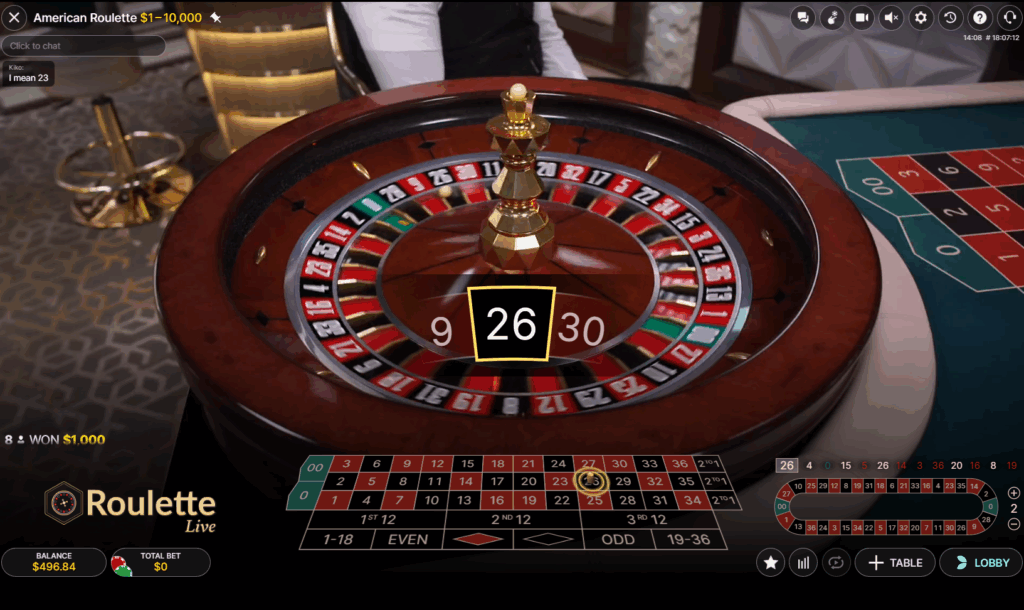
casino malaga poker: mitos y realidades de 2026
casino malaga poker plantea un desafío intelectual constante que atrae a jugadores de todos los niveles. Desde la gestión de la banca hasta la lectura de los rivales, cada detalle cuenta en la búsqueda del éxito. En este artículo, nos centramos en las tendencias emergentes y en la relevancia de cartas poker malaga para afrontar los retos de 2026.
Ver también:
- Visión general: poker malaga reservas explicado
- casino malaga poker en Cifras: Datos Clave
- torneos poker malaga: ventajas y funciones destacadas
- Bonos y Términos de Póker en casino malaga poker
- ¿Cómo aprovechar poker malaga reservas al iniciar?
- Guía de cartas poker malaga para principiantes
- Prácticas de Juego Seguro en casino malaga poker (2026)
Visión general: poker malaga reservas explicado
Fast Fold is a term that describes a rapid, decisive action in the context of competitive card games, particularly poker. It refers to the act of folding one’s hand almost immediately after the betting action reaches you, without taking any noticeable time to consider your options. This move is often executed within a second or two, and it signals to other players at the table that you have no interest in continuing the hand, regardless of the strength of your cards. The fast fold is not just a physical action; it is a strategic tool that can be used to manipulate the perceptions of opponents and to manage the flow of the game. When a player fast folds, they are essentially broadcasting that their hand was either very weak or that they are not willing to risk any more chips on that particular round. This can be a deliberate tactic to project an image of tightness or to avoid giving away any information through hesitation or body language. In live poker, a fast fold is often accompanied by a quick, almost mechanical motion of tossing the cards face down toward the dealer or the muck pile, without any dramatic flair or prolonged eye contact. The action is so swift that it can catch other players off guard, especially if they were expecting a more deliberate response. In online poker, the fast fold is even more pronounced, as players can use the ‘fold’ button instantly, and the software immediately processes the action, moving the game forward without any delay. This speed can be advantageous in multi-table tournaments where time management is crucial, as it allows a player to conserve their time bank for more critical decisions. However, the fast fold is not without its risks. Overusing this tactic can make you predictable, and observant opponents may start to exploit your tendency by bluffing more often when you quickly fold, knowing that you are unlikely to call with marginal hands. Conversely, a well-timed fast fold can be a powerful deception, as it might lead opponents to believe that you are folding strong hands too, which could encourage them to play more aggressively against you in future hands, only to be trapped when you actually have a monster. The concept of the fast fold also extends beyond poker into other areas of life, such as business negotiations or personal decisions, where making a quick choice to abandon a losing proposition can be more valuable than stubbornly holding on. In the fast-paced world of modern poker, where players are constantly seeking any edge, the fast fold has become a recognized part of the language of the game, and it is often discussed in strategy forums and coaching videos. Some players even use the fast fold as a way to reset their mental state, clearing their mind after a tough hand and refocusing on the next one. The speed of the fold can also affect the psychological dynamics at the table; a player who fast folds repeatedly may be perceived as disinterested or even intimidated, which can alter the way opponents play against them. On the other hand, a player who occasionally fast folds with a strong hand can create a level of unpredictability that makes them harder to read. In tournament play, where the blind levels increase rapidly, the fast fold can be a necessary survival skill, allowing a player to conserve chips and avoid marginal confrontations that could jeopardize their tournament life. The decision to fast fold is often based on a combination of factors, including your position at the table, the betting patterns of your opponents, the size of your stack, and the overall texture of the game. For example, if you are in early position and the player under the gun raises, you might fast fold a hand like Ace-Queen offsuit if you believe the raiser is tight and likely has a stronger range. Conversely, if you are in the big blind and facing a small raise from the button, you might fast fold a weak hand like Seven-Deuce offsuit without a second thought. The key is to make the fast fold a conscious, deliberate part of your overall strategy, rather than an impulsive reaction. By doing so, you can use it to shape your table image, manage your time, and keep your opponents guessing. In cash games, the fast fold can also be a way to minimize losses when you are on tilt or when you feel that you are not playing your best. Taking a quick fold can help you step back and reassess your approach, rather than getting caught up in a hand that you are likely to lose. Ultimately, the fast fold is a testament to the importance of efficiency and decisiveness in poker. It shows that you are willing to make tough decisions quickly and move on, which is often the hallmark of a successful player. The term has also been adopted in other contexts, such as in the world of sports betting or stock trading, where a ‘fast fold’ might refer to cutting your losses on a bad bet or investment before it deteriorates further. In all these cases, the underlying principle is the same: sometimes the best move is to get out quickly and preserve your resources for better opportunities. As poker continues to evolve, the fast fold remains a fundamental technique that every player should master, not just for its practical benefits, but also for the psychological edge it can provide.
no kyc online casino — verificación de cuenta | no kyc online casino
casino malaga poker en Cifras: Datos Clave
| Feature | Details |
|---|---|
| Métodos de pago | Visa, PayPal, € |
| Jugadores activos | 125% españoles |
| Jugadores españoles | Aceptados, registrados en 2025 |
| VIP program | Exclusive rewards & cashback |
| Estadísticas | 100% de pago |
torneos poker malaga: ventajas y funciones destacadas
Open. The word itself is a hinge, a door left ajar, a mouth caught mid-vowel. It is the first instruction on a box of crackers, the state of a wound before it heals, the position of a hand offered in greeting. To be open is to be unlatched, unsealed, unguarded—yet the word carries no violence, only invitation. Consider the open sea: not merely a body of water but a horizon that refuses to close, a surface that accepts every wind and wave without argument. Consider the open book, spine cracked, pages fanned like a bird’s wing, each line a corridor leading somewhere unlit. Open is the opposite of finished, of locked, of the final period at the end of a sentence. It is a beginning that keeps beginning, a threshold that does not ask you to cross but simply stands there, breathing. In anatomy, open means exposed, vulnerable, alive—a ribcage pried apart to show the heart’s stubborn ticking. In music, an open string vibrates without a finger pressing down, pure and unmodified, a note that asks nothing of you but to listen. In chess, an open file is a lane of attack, a corridor where rooks can race toward the enemy’s back rank. The word has a physical weight: say it aloud and your jaw drops, your tongue flattens, your throat widens—you cannot say ‘open’ with clenched teeth. It demands a slackness, a giving-over. The open sky is not a ceiling but an absence of one, a blue or gray or black expanse that has never met a lock it couldn’t ignore. Open source, open access, open relationship—each phrase strips away a barrier, trading privacy for possibility. Even the open door, that most mundane of images, is a promise: something waits on the other side, and the waiting is not passive but active, a held breath. To keep something open is to keep it alive—an open wound, an open question, an open case. The word tolerates no closure, no finality; it is the opposite of ‘done.’ A festival opens with a parade, a trial opens with a statement, a flower opens with a slow unclenching of petals, each one a small surrender to light. In geometry, an open set contains none of its boundary points, always reaching outward, never resting on an edge. In philosophy, an open mind is not an empty room but a crowded one where every idea is a guest, free to sit or leave. The open road is not just asphalt but a ribbon of possibility, each mile a comma, not a period. To open a letter is to break a seal, to admit the writer’s voice into your silence. To open a door for someone is to say, ‘Your passage matters to me.’ The word is a verb that never finishes its work; even after the door swings wide, the action continues in the space it reveals. Open is the first word of many stories, the last word of none. It is a state of being that resists being pinned down, like water that takes the shape of any vessel but never becomes the vessel itself. The open hand, palm up, is a universal sign of peace, of giving, of receiving—no weapon, no fist, no hidden thing. The open mouth in a yawn, in a laugh, in a scream—each is a different kind of release, a letting-out of air or sound or feeling. Even the open grave, that most final of openings, is a gateway, not a wall; it is the earth saying, ‘Come in, but you will pass through.’ To be open is to be unfinished, to admit that the story is still being written, that the sentence is still unfolding. It is a posture of curiosity, a willingness to be changed by what enters. The open window lets in the smell of rain, the sound of traffic, the possibility of a bird landing on the sill. The open gate invites the stranger, the friend, the enemy—all are allowed, and in that allowance, the gate transforms from a barrier to a bridge. Open is not careless; it is deliberate. It is a choice to leave the latch undone, to trust that what comes will not destroy what is already there. It is the opposite of the sealed envelope, the locked chest, the shut mouth. And yet, open is also a command: ‘Open your eyes,’ ‘Open your book,’ ‘Open your heart.’ It is an imperative that asks for action, for a shift from closed to ajar. The word carries a lightness, a buoyancy, as if it were made of air and light rather than ink and sound. Say it again: open. Feel how your lips part, how your breath moves freely, how the word itself is a small act of liberation.
Bonos y Términos de Póker en casino malaga poker
- €1500 en giros gratis
- 125% de bonificación en tu próximo depósito
- €1500 extra en tu primer depósito
- 25x playthrough requerido
- 25x apuesta requerida
- 35x requisito de juego
¿Cómo aprovechar poker malaga reservas al iniciar?
casino malaga poker ofrece una experiencia de juego segura y regulada para todos los usuarios.
Guía de cartas poker malaga para principiantes
¿Qué tipo de torneos de póker ofrece casino malaga poker?
casino malaga poker organiza una variedad de torneos, incluyendo sit-and-go, torneos multimesa y series especiales con premios garantizados.
¿Cuál es el depósito mínimo para jugar al póker en casino malaga poker?
El depósito mínimo para acceder a las mesas de póker es de €6.
¿Ofrece casino malaga poker un bono de bienvenida para jugadores de póker?
Sí, casino malaga poker ofrece un bono de bienvenida de €750 de bono sin depósito con un requisito de apuesta de 35x juego en 30 días.
¿Está casino malaga poker regulado por alguna licencia?
Sí, casino malaga poker opera bajo la licencia de DGOJ — Dirección General de Ordenación del Juego, lo que garantiza un juego seguro y justo.
¿Puedo jugar al póker en la aplicación móvil de casino malaga poker?
Sí, casino malaga poker dispone de una aplicación móvil compatible con iOS y Android donde puedes jugar al póker y participar en torneos.
atención al cliente 888 casino — experiencia verificada | 888 casino
casino bingo online — números de la suerte | casino bingo online
casino malaga poker presenta una interfaz intuitiva y fácil de navegar para los usuarios.
Prácticas de Juego Seguro en casino malaga poker (2026)
El juego está destinado exclusivamente a mayores de 18 años. casino malaga poker opera bajo la supervisión de la Dirección General de Ordenación del Juego (DGOJ) en España. Si sientes que necesitas ayuda, puedes acogerte al Registro General de Interdicciones de Acceso al Juego (RGIAJ) para autoexcluirte de todas las plataformas de juego online. Para apoyo confidencial, contacta con FEJAR en el teléfono 900 200 225 o visita jugarBIEN.es. Te recomendamos establecer límites de depósito y tiempo, y jugar siempre como entretenimiento, nunca para recuperar pérdidas.
casino malaga 2026 — casino malaga reservas
tragamonedas gratis sin descargar sin registrarse sin dinero real lobstermania — atajos | tragamonedas gratis sin descargar sin registrarse sin dinero real lobstermania