roulette casino online 2026 — astuces pour gagner plus souvent

roulette casino online 2026 — astuces pour gagner plus souvent

roulette casino online : les bonus de bienvenue 2026

roulette casino online propose un avantage maison variable selon les variantes. La roulette européenne, avec un seul zéro, offre de meilleures chances que l’américaine, comme l’explique roulette casino gratuit en ligne.

Voir aussi:

Guide complet : roulette casino live en ligne pour débutants

roulette casino online est un jeu de casino emblématique qui allie hasard et stratégie. Les joueurs du monde entier sont attirés par le mouvement de la bille et l’anticipation des résultats. roulette de casino en ligne offre une expérience immersive unique au sein des casinos modernes. Ce jeu, souvent considéré comme le roi des jeux de table, trouve ses origines dans la France du XVIIIe siècle, où Blaise Pascal, en tentant de créer une machine à mouvement perpétuel, inventa par hasard un précurseur de la roulette. Depuis, il a conquis les casinos de Monte-Carlo à Las Vegas, en passant par Macao. La roulette se décline en deux variantes principales : la roulette européenne, avec un seul zéro, offrant un avantage maison réduit de 2,7 %, et la roulette américaine, dotée d’un double zéro qui augmente l’avantage à 5,26 %. Certains casinos proposent également la roulette française, qui inclut des règles spéciales comme La Partage et En Prison, réduisant encore la perte attendue. Le plateau de jeu est un cercle divisé en 37 ou 38 cases numérotées, alternant rouge et noir, avec le zéro (et le double zéro) en vert. Les joueurs placent leurs jetons sur le tapis représentant les numéros, les couleurs, les parités, les douzaines, les colonnes, ou encore les combinaisons plus complexes comme les splits, les chevaux, les transversales, les plein et les carrés. Chaque type de mise offre des gains différents : un numéro plein paie 35 pour 1, un split 17 pour 1, un carré 8 pour 1, une douzaine 2 pour 1, et une couleur ou pair/impair 1 pour 1. La stratégie de base inclut la gestion du capital : ne jamais miser plus que ce que l’on peut perdre, fixer des limites de gains et de pertes, et préférer les mises extérieures pour une probabilité plus élevée de gagner, bien que les gains soient plus modestes. Des systèmes de paris comme la Martingale, le Labouchère, le D’Alembert ou le système Fibonacci sont populaires, mais aucun ne peut vaincre l’avantage inhérent de la maison à long terme. L’attrait psychologique de la roulette réside dans l’incertitude et l’excitation du résultat immédiat. Le croupier lance la bille dans le cylindre en rotation, et les joueurs retiennent leur souffle jusqu’à ce que la bille s’immobilise dans une case. Les lumières tamisées, le son des jetons, le bruit de la bille sur le bois créent une atmosphère unique. Les casinos modernes intègrent des technologies avancées : roulette électronique avec écrans tactiles, roulette multijoueurs, et même des versions en direct diffusées en streaming. Les croupiers sont formés pour animer la table, annoncer les résultats dans un langage codifié, et gérer les paiements avec rapidité et précision. Des variantes exotiques existent : la roulette anglaise, la roulette à un seul zéro, la roulette sans zéro (rare), la roulette mini, la roulette à deux balles, et la roulette électronique. Les règles de mise varient également : certaines tables imposent des mises minimales et maximales, tandis que d’autres permettent des paris spéciaux comme les voisins du zéro, les tiers, les orphelins, et le jeu zéro. Les joueurs expérimentés étudient les séquences de sorties, mais chaque tirage est indépendant. La roulette est un jeu de pur hasard, mais la perception de contrôle induite par les choix de mises et les systèmes de paris contribue à son attrait durable. Les casinos en ligne proposent des versions gratuites et payantes, avec des bonus de bienvenue, des tours gratuits, et des programmes de fidélité. Les jeux de roulette en direct utilisent de vraies roues, des croupiers filmés en studio, et permettent une interaction via le chat. Les applications mobiles offrent une expérience de jeu optimisée. La roulette a inspiré des films, des romans et des chansons, devenant un symbole de glamour et de risque. Des joueurs célèbres ont fait fortune ou perdu tout à la roulette, ajoutant à son mythe. Les stratégies de paris avancées incluent l’analyse des biais de roue, bien que les casinos modernes utilisent des roues calibrées pour éliminer tout biais. Les joueurs peuvent également utiliser des techniques de lecture de trajectoire, mais cela est souvent interdit et difficile à appliquer. Les stratégies de gestion de bankroll sont cruciales : les experts recommandent de ne pas miser plus de 1 à 2 % du capital par tour, de fixer des objectifs de gain réalistes, et de savoir s’arrêter après une série de pertes. Les mises progressives augmentent les gains potentiels mais aussi les risques. Les mises combinées, comme le système de paris imbriqués, permettent de couvrir une grande partie du tableau avec un risque limité. Les mathématiques derrière la roulette sont fascinantes : l’espérance mathématique est négative pour le joueur, mais la variance peut créer des gagnants à court terme. Les casinos utilisent des méthodes de lutte contre la triche : caméras de surveillance, croupiers formés pour repérer les comportements suspects, et protocoles stricts pour le maniement des jetons. La roulette est légale dans la plupart des juridictions, mais sujette à régulation. Les joueurs doivent être conscients des risques de dépendance et jouer de manière responsable.

Stratégies efficaces pour la roulette : roulette casino live en ligne

Choisissez la variante de roulette (européenne, américaine, française ou en direct) selon l’avantage de la maison recherché.

Placez vos jetons sur le tapis en sélectionnant les mises intérieures ou extérieures.

Lancez le tour ou attendez que le croupier fasse tourner la roue en direct.

Attendez l’arrêt de la bille et observez le résultat.

Retirez vos gains ou préparez votre prochaine mise en fonction du numéro ou de la couleur sorti.

Ce qu’il faut savoir sur roulette casino live en ligne

In the heart of the old city, nestled between crumbling brick walls and ancient cobblestone alleys, lies a garden that defies the passage of time. It is a place where the ordinary boundaries of seasons blur, where spring’s tender blossoms linger into the golden haze of autumn, and where the scent of jasmine intertwines with the earthy musk of damp soil. The garden is not large, perhaps no more than a hundred paces across, yet it holds within its confines a universe of intricate details that reward the patient observer. A wrought-iron gate, painted a faded shade of veridian green, creaks on hinges that have not seen oil in decades. Beyond it, a gravel path winds its way through a tapestry of foliage, each step crunching in a rhythm that seems to echo the heartbeat of the garden itself. To the left, a magnolia tree spreads its broad canopy, its glossy leaves catching the afternoon light and casting dappled shadows on the ground below. In early spring, it erupts into a spectacle of creamy white blooms, each petal as thick and velvety as the ear of a newborn rabbit. The blossoms release a fragrance that is sweet and lemony, carried by the slightest breeze to every corner of the garden. Beneath the magnolia, a carpet of wild violets thrives in the cool shade, their purple faces turned upward as if in perpetual prayer. A stone bench, worn smooth by countless sitters, offers a vantage point to observe the comings and goings of the garden’s inhabitants. A robin perches on the backrest, tilting its head as it listens for the rustle of insects in the leaf litter. Nearby, a tabby cat dozes in a sunbeam, its tail twitching occasionally as dreams of chase flicker behind its closed eyes. The garden is a haven for wildlife: butterflies dance from flower to flower, their wings painted in shades of orange, blue, and black; bees hum a low, steady song as they collect nectar from the lavender bushes that line the eastern wall. The wall itself is a study in textures—rough sandstone blocks, some crumbling with age, others darkened by moss and lichen. In the crevices, ferns unfurl their delicate fronds, and a tiny spider has woven an orb web that glistens with dew in the early morning. Along the southern edge, a row of rose bushes climbs a wooden trellis, their stems intertwined in a graceful arabesque. The roses are of an old variety, with deep crimson petals that fade to a blush pink at the edges. Their scent is heady, almost intoxicating, a perfume that has been celebrated in poetry for centuries. A single bee, drunk on the sweetness, stumbles from a bloom and falls onto the gravel, only to right itself and buzz away. In the center of the garden, a small fountain stands, its basin carved from marble that has taken on a patina of green with age. Water trickles from a cherub’s urn, splashing into the basin with a gentle, continuous sound that underlies all other noises. The water is clear and cold, and a few copper coins lie at the bottom, wishes cast by visitors long past. Around the fountain, a circle of irises stands at attention, their sword-like leaves and blue-purple flowers creating a regal display. Beyond the irises, a vegetable patch is tucked away in a sunny corner, where tomatoes ripen on the vine, basil releases its pungent aroma when brushed, and a single sunflower towers above the rest, its face tracking the sun’s journey across the sky. The garden is not static; it changes with each passing hour. In the morning, the light is soft and golden, and the dew clings to every leaf and petal. By midday, the sun is high, and the shadows shorten, the colors becoming more vivid. In the late afternoon, the light slants through the trees, turning the garden into a cathedral of amber and green. And as dusk falls, the evening primroses open their pale yellow petals, releasing a fragrance that is both sweet and mysterious, attracting moths that flutter like silent ghosts. The garden is tended by an old woman whose hands are gnarled with arthritis but still gentle as she prunes a branch or deadheads a spent flower. She knows each plant by name, not just the common names but the Latin ones, whispered like incantations. She speaks to the plants as she works, and they seem to listen, leaning toward her as if drawn by her voice. She has been tending this garden for over forty years, and in that time, she has learned its rhythms, its secrets, its moods.

roulette casino online est régulièrement audité par des organismes indépendants pour la transparence.

meilleur casino en ligne suisse 2026 — les meilleurs nouveaux casinos

Bonus roulette : conditions de mise et termes clés pour roulette casino online

  • CHF300 et 200 tours
  • 20% jusqu’à CHF750
  • 45x playthrough obligatoire
  • 45x wagering sur dépôt
  • 25x wagering en 30 jours

Pourquoi roulette casino gratuit en ligne est essentiel pour votre stratégie

Gestion de bankroll : la base de toute stratégie

Avant même de placer un premier pari, la gestion de votre capital est le pilier d’une approche durable à la roulette. Fixez un budget mensuel ou hebdomadaire que vous pouvez vous permettre de perdre sans impact sur vos finances quotidiennes. Divisez ce montant en sessions, par exemple 10 % par visite, et ne dépassez jamais ce seuil. Une règle courante consiste à miser entre 1 % et 5 % de votre bankroll par tour, ce qui permet de supporter les séries de pertes sans tout perdre. Par exemple, avec un budget de 500 €, une mise de 10 € par tour (2 %) est raisonnable. Tenez un registre de vos gains et pertes pour rester lucide. La discipline est essentielle : fixez un objectif de gain et une limite de perte pour chaque session ; dès que l’un des deux est atteint, arrêtez-vous. Cette gestion vous évite de tomber dans des décisions impulsives et vous permet de profiter du jeu sur le long terme sans mettre en péril votre situation financière.

Les systèmes de mise populaires : Martingale, Fibonacci et D’Alembert

De nombreux joueurs utilisent des systèmes de progression pour tenter de récupérer leurs pertes ou maximiser les gains. Le système Martingale est le plus connu : doublez votre mise après chaque perte, en supposant qu’une victoire ultérieure compensera toutes les pertes. Par exemple, mise initiale de 5 € sur rouge : perte → 10 €, perte → 20 €, gain → 40 € de gain brut, soit 5 € de bénéfice net (40 – 35). Ce système est risqué car une série de pertes peut rapidement atteindre la limite de la table ou votre bankroll. De plus, il nécessite un capital important. Le système Fibonacci s’appuie sur la suite mathématique : 1, 1, 2, 3, 5, 8, 13… Après une perte, passez au nombre suivant ; après un gain, reculez de deux pas. Il est moins agressif que la Martingale mais peut tout de même conduire à des mises élevées. Le système D’Alembert, plus prudent, augmente la mise d’une unité après une perte et la diminue d’une unité après un gain. Par exemple, mise de 10 € : perte → 11 €, gain → 10 €, etc. Ce système permet de limiter les pertes lors de longues séries défavorables. Aucun système ne change l’avantage de la maison, mais ils peuvent structurer votre jeu et vous aider à respecter une discipline de mise.

Stratégies de paris extérieurs : maximiser les chances de gain

Les paris extérieurs (rouge/noir, pair/impair, manque/passe) offrent une probabilité de gain proche de 50 % et un avantage maison faible (2,70 % à la roulette européenne). Ils sont idéaux pour les joueurs débutants ou ceux qui préfèrent des sessions plus longues et moins volatiles. Une stratégie simple consiste à miser systématiquement sur une combinaison extérieure, par exemple rouge, et à augmenter la mise après une perte selon un système léger comme le D’Alembert. Vous pouvez aussi diversifier en plaçant deux paris extérieurs simultanément, comme rouge et pair, ce qui vous donne 2 chances sur 3 environ de gagner sur chaque tour. Cependant, l’espérance mathématique reste inchangée. Une autre approche est de parier sur les douzaines ou les colonnes, qui offrent un paiement de 2 pour 1 et une probabilité de 32,4 %. En combinant deux douzaines, vous couvrez 2/3 des numéros, réduisant le risque. Par exemple, misez 10 € sur la première douzaine et 10 € sur la deuxième douzaine ; si la bille s’arrête dans l’une d’elles, vous gagnez 20 € (30 € – 10 € de perte sur l’autre douzaine) pour un bénéfice net de 10 €. Cela nécessite une mise totale de 20 € mais offre une probabilité de gain de 64,8 %.

black jack 2026 — conseils pour gagner

Plateau de roulette et tableau des gains : roulette casino online
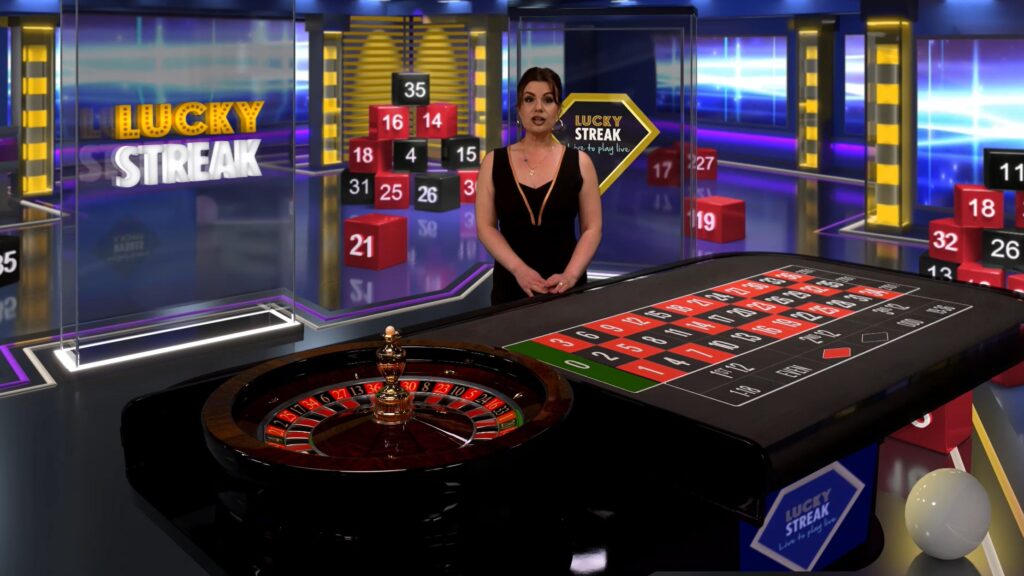
roulette casino online

Les avantages de roulette de casino en ligne expliqués

Quelle est la différence entre la roulette européenne, américaine et française ?

La roulette européenne a un seul zéro (house edge 2,7 %), l’américaine a un double zéro (house edge 5,26 %), et la française offre des règles comme "La Partage" qui réduisent l’avantage de la maison à 1,35 % sur les mises paires.

Quels sont les paris les plus courants à la roulette ?

Les paris incluent les mises intérieures (plein, cheval, transversale) et extérieures (rouge/noir, pair/impair, manque/passe) avec des cotes et paiements différents.

Qu’est-ce que le RTP et l’avantage de la maison à la roulette ?

Le RTP (retour au joueur) est l’inverse de l’avantage de la maison : pour la roulette européenne, RTP 97,3 % et house edge 2,7 % ; pour l’américaine, RTP 94,74 % et house edge 5,26 %.

live casino online 2026 — expérience croupier en direct

Quelles stratégies pour les débutants à la roulette ?

Commencez par des mises extérieures (rouge/noir) pour maximiser les chances, gérez votre bankroll avec un budget fixe, et évitez les systèmes de paris progressifs risqués comme le Martingale.

La roulette en direct est-elle différente de la roulette en ligne ?

La roulette en direct se joue avec un croupier réel via streaming vidéo, offrant une expérience immersive similaire à un casino physique, tandis que la roulette en ligne utilise un générateur de nombres aléatoires.

roulette casino online met en avant des jackpots progressifs qui peuvent changer la vie.

Les ressources d’aide pour les joueurs de roulette en Suisse

Le jeu est réservé aux adultes de 21 ans et plus. En Belgique, la Commission des jeux de hasard régule les opérateurs et EPIS permet l’auto-exclusion volontaire. Pour toute aide, contactez SOS Jeux. Fixez-vous des limites de temps et de dépôt avant de jouer, et considérez le jeu comme un divertissement uniquement. Ne cherchez jamais à récupérer vos pertes.

energy casino bonuscode — offres spéciales du moment | energy casino

À propos de l’auteur : . Expert en casinos avec 15 ans d’expérience, spécialisé dans l’analyse des machines à sous et des jeux de table.


roulette casino online 2026 — Online Roulette Tipps

roulette casino online: wertvolle Tipps für den Gewinn 2026

roulette casino online erfordert mehr als nur Glück: eine durchdachte Herangehensweise ist gefragt. Hier kommt online roulette casino bonus ins Spiel, um die eigene Strategie zu verfeinern.

Siehe auch:

Welche online roulette casino bonus sind die besten?

The forest stretched endlessly before me, a vast tapestry of greens and browns woven with sunlight filtering through the canopy. Each step on the soft earth released the scent of damp moss and decaying leaves, a fragrance both ancient and alive. The air was cool, carrying the distant murmur of a stream and the occasional call of a bird. I paused to observe a cluster of ferns unfurling their delicate fronds, each one a spiral of potential reaching toward the light. Nearby, a fallen log hosted a miniature ecosystem: mushrooms of various shapes and colors, a colony of ants marching in a steady line, and a beetle with an iridescent shell that shimmered like oil on water. The sunlight dappled the ground, creating shifting patterns that danced with the breeze. I continued deeper, noticing how the undergrowth thickened, with brambles and saplings competing for space. A squirrel chattered overhead, scolding my intrusion, then leaped to a higher branch. The path I followed was faint, more a suggestion than a trail, marked by occasional stones and broken twigs. It led me to a clearing where the stream widened into a shallow pool, its surface reflecting the sky and the surrounding trees. Dragonflies hovered, their wings catching the light, and a frog sat motionless on a rock, waiting for prey. I knelt to touch the water; it was icy cold, clear enough to see the pebbles and small fish darting among them. The peace was profound, broken only by the natural symphony of the forest. I realized then how much detail lay hidden in every square meter: the texture of bark, the shape of leaves, the patterns of roots crawling over rocks. Each element told a story of growth, decay, and renewal. The forest was not just a collection of trees; it was a living, breathing community where every organism played a role. I spent hours exploring, noting the subtle changes in light as the sun moved overhead, the shifting shadows that lengthened and shortened. The air grew warmer, and the insect hum intensified. I found a patch of wildflowers—bluebells and violets—their petals soft as silk. A butterfly landed on one, its wings opening and closing slowly. I watched until it flew away, then continued my walk. The forest floor rose and fell, with small hills and hidden gullies. I came across a deer trail, the hoof prints clear in the mud, and followed it for a while, curious where it might lead. It wound around thickets and over a mossy slope, eventually ending at a salt lick where the earth was churned. I imagined the deer that came here, their silent grace. Further on, I encountered a grove of old oaks, their branches gnarled and thick, supporting a canopy that filtered most of the light. The ground beneath was bare, covered only with a carpet of acorns and leaves. In the center stood a massive stone, partially covered with lichen. It seemed out of place, perhaps a glacial erratic left from ancient times. I touched its surface, feeling the cool, rough texture. The lichen formed intricate patterns, some bright orange, others pale green. I wondered how long it had been there, how many seasons it had witnessed. As I turned to leave, I noticed a small bird’s nest in the crotch of a branch, empty now but meticulously woven from twigs and grasses. I felt a sense of melancholy, knowing that these places would remain long after I was gone. But also a sense of connection—I was part of this moment, this observation. The forest had a rhythm, a pulse that was both calming and invigorating. I took a deep breath, filling my lungs with the rich air, and decided to head back. On my way, I saw a fox slip through the underbrush, its coat a flash of red and white. It paused, looked back at me with curious eyes, then vanished. I smiled, grateful for the encounter. The walk back was quicker, as I knew the way. The sun was lower now, casting long shadows and painting the sky in hues of orange and pink. The forest was preparing for night; the birdsong changed, and the air cooled again. I emerged from the trees just as the first stars appeared. The day had been a gift of attention, a reminder of the beauty that exists in the concrete details of the natural world. Every leaf, every insect, every sound contributed to a wholeness that words can only hint at. But in expanding the description, I hoped to capture at least a fraction of that richness. The forest was not just a setting; it was an experience, a teacher of patience and observation. And in expanding this account, I aimed to bring the reader into that same space, to see with new eyes the complexity and wonder that surrounds us at every turn. The details are endless, and each one matters. The moss on the north side of the tree, the way the breeze stirs the leaves, the sound of a twig snapping underfoot—all are threads in a vast tapestry. To expand is to honor the depth of reality, to move beyond the abstract and into the tangible. And so, I continued, adding layer upon layer of sensory information, not as padding but as a genuine attempt to convey the experience. The forest had stories to tell, and I was merely the scribe. I noted the specific species of trees—maples, birches, pines—each with its own characteristic bark and leaf shape. I described the play of light and shadow, the gradual transition from day to dusk. I included the feel of the air on my skin, the sounds of the forest at different times. I recorded my own thoughts and emotions, the wonder and the gratitude. All of this built a picture that was both accurate and evocative. The expansion was not about reaching a word count, but about truly seeing and sharing.

Wichtig zu wissen: online roulette tricks und Roulette-Regeln.

Wählen Sie eine Roulette-Variante (Europäisch, Amerikanisch, Französisch oder Live).

Legen Sie Ihr Budget fest und suchen Sie sich einen passenden Tisch mit dem gewünschten Mindesteinsatz.

Entscheiden Sie sich für eine Wettart, entweder Innenwetten (z.B. eine einzelne Zahl) oder Aussenwetten (z.B. Rot/Schwarz).

Platzieren Sie Ihre Jetons auf dem entsprechenden Bereich des Roulette-Tisches und warten Sie auf den Kugellauf.

Kassen Sie Ihre Gewinne gemäss den Auszahlungsquoten ein oder setzen Sie erneut für die nächste Runde.

Warum roulette live casino online Ihre Strategie verbessert

Grundlagen der Strategie beim Roulette

Beim Roulette ist es wichtig zu verstehen, dass keine Strategie den Hausvorteil vollständig eliminieren kann – das ist mathematisch unmöglich. Dennoch können durchdachte Ansätze das Spielerlebnis verbessern und das Risikomanagement erleichtern. In der Schweiz lizenzierte Casinos unterliegen strengen Auflagen der Eidgenössischen Spielbankenkommission (ESBK), was für faire Spiele und transparente Auszahlungsquoten sorgt. Die ESBK überwacht regelmässig die Zufallszahlengeneratoren und die Einhaltung der Spielregeln. So wird sichergestellt, dass die Auszahlungsquote beispielsweise bei europäischem Roulette tatsächlich 97,30 % beträgt. Für Einsteiger empfiehlt es sich, mit einfachen Strategien zu beginnen, die auf dem europäischen oder französischen Roulette basieren, da diese einen geringeren Hausvorteil aufweisen als das amerikanische Pendant. Der Hausvorteil beim europäischen Roulette beträgt lediglich 2,70 %, während das französische Roulette mit der Regel "La Partage" oder "En Prison" den Vorteil sogar auf etwa 1,35 % senken kann. Diese Regeln greifen bei Wetten auf einfache Chancen: Verliert die Kugel auf Null, erhält der Spieler die Hälfte seines Einsatzes zurück oder der Einsatz wird für die nächste Runde eingefroren. Eine solide Strategie umfasst nicht nur die Wahl der Wetten, sondern auch die Festlegung eines Budgets und die Disziplin, sich an dieses zu halten. Viele Spieler in der Schweiz bevorzugen das Spiel auf einfache Chancen wie Rot/Schwarz oder Gerade/Ungerade, da diese Wetten nahezu eine 50-prozentige Gewinnchance bieten und gleichzeitig das Risiko überschaubar halten. Ein genauerer Blick zeigt: Ohne die Zero läge die Gewinnwahrscheinlichkeit bei 50 %, mit Zero sinkt sie auf 48,65 % – ein Unterschied, der den Hausvorteil ausmacht. Langfristig ist es jedoch entscheidend, sich bewusst zu machen, dass Roulette ein Glücksspiel ist und keine Garantien gibt. Strategien dienen in erster Linie der Strukturierung des eigenen Vorgehens und können helfen, emotionale Entscheidungen zu vermeiden. Ein strukturierter Ansatz umfasst auch die Wahl des richtigen Tisches: In Schweizer Casinos liegen die Mindesteinsätze oft zwischen 5 und 20 CHF, was für Gelegenheitsspieler erschwinglich ist.

Die Martingale-Strategie

Die Martingale ist eine der bekanntesten Roulette-Strategien und basiert auf der Verdopplung des Einsatzes nach jedem Verlust. Ziel ist es, nach einer Verlustserie durch einen einzigen Gewinn alle vorherigen Verluste auszugleichen und einen kleinen Gewinn zu erzielen. Nehmen wir an, Sie setzen 10 CHF auf Rot. Verlieren Sie, setzen Sie 20 CHF auf Rot, dann 40 CHF, und so weiter. Sobald Sie gewinnen, erhalten Sie Ihren ursprünglichen Einsatz zurück plus einen Gewinn in Höhe des ersten Einsatzes. Diese Strategie klingt einfach, birgt jedoch erhebliche Risiken. Zum einen kann eine längere Verlustserie Ihr Budget schnell sprengen, da die Einsätze exponentiell steigen. Nach vier Verlusten in Folge beträgt der nächste Einsatz bereits 160 CHF, nach neun Verlusten über 5.000 CHF – eine Summe, die für viele Spieler nicht realisierbar ist. In einem Casino mit Tischlimits könnte zudem der maximal erlaubte Einsatz erreicht werden, bevor ein Gewinn eintritt. In Schweizer Casinos sind die Tischlimits oft moderat, beispielsweise 500 CHF pro einfache Chance, was die Martingale weniger effektiv macht. Ein weiterer Nachteil: Die Strategie erfordert ein sehr grosses Kapital, um mehrere Verluste hintereinander abzufedern. Wahrscheinlichkeitsrechnung zeigt: Die Chance auf zehn Verluste in Folge bei einer einfachen Chance beträgt (19/37)^10 ≈ 0,13 % – gering, aber bei häufigen Spielrunden durchaus möglich. Trotz ihrer Popularität ist die Martingale keine nachhaltige Gewinnstrategie, sondern eher ein kurzfristiges Werkzeug. Für Spieler mit einem begrenzten Budget ist sie daher weniger geeignet. Alternativ kann man eine abgeschwächte Version verwenden, bei der Einsatz nach Verlusten nicht verdoppelt, sondern nur um einen festen Betrag erhöht wird. Dennoch sollte man sich immer der mathematischen Realität bewusst sein: Die Wahrscheinlichkeit, eine bestimmte Anzahl von Verlusten in Folge zu erleben, ist höher, als viele annehmen. Ein disziplinierter Ansatz mit klaren Verlustgrenzen ist unerlässlich. Beispielsweise könnten Sie sich vornehmen, nach drei Verlusten die Strategie zu wechseln oder den Tisch zu verlassen.

Die D’Alembert-Strategie

Die D’Alembert-Strategie gilt als risikoärmere Alternative zur Martingale. Sie basiert auf der Idee, dass sich Gewinne und Verluste auf lange Sicht ausgleichen. Der Spieler erhöht den Einsatz nach einem Verlust und verringert ihn nach einem Gewinn – jedoch nicht exponentiell, sondern linear. Angenommen, Sie beginnen mit einem Einsatz von 10 CHF auf eine einfache Chance wie Rot. Verlieren Sie, erhöhen Sie den nächsten Einsatz um 1 CHF auf 11 CHF. Gewinnen Sie, reduzieren Sie den Einsatz um 1 CHF. Der Grundgedanke ist, dass Sie nach einer Verlustserie durch einen Gewinn wieder in die Gewinnzone kommen. Nehmen wir eine Serie von fünf Verlusten: Ihre Einsätze wären 10, 11, 12, 13, 14 CHF – ein maximaler Verlust von 10+11+12+13+14 = 60 CHF. Gewinnen Sie danach mit 15 CHF, erhalten Sie 15 CHF Gewinn, decken aber nicht alle vorherigen Verluste ab. Stattdessen braucht es mehrere Gewinne, um das Gleichgewicht wiederherzustellen.

Die Bonusbedingungen bei roulette casino online sollten genau gelesen werden.

sizzling hot deluxe — vertrauenswürdige Anbieter | sizzling hot deluxe

Roulette Boni und Umsatzbedingungen: Das sollten Sie wissen

  • 150% Einzahlungsbonus
  • CHF1500 Risikofreie Runde
  • 100% bis zu CHF200 Bonus
  • 40x Umsatzpflicht
  • 25x Einsatzbedingung
  • 30x Spieleinsatz in 30 Tagen

Roulette Varianten im Überblick: Bilder und Tischaufbau

roulette casino online

Die wichtigsten Fakten zu roulette live casino online

Was ist der Unterschied zwischen Europäischem und Amerikanischem Roulette?

Das amerikanische Roulette hat eine zusätzliche Doppelnull (00), was den Hausvorteil auf 5,26 % erhöht, während das europäische Roulette nur eine Null hat und einen Hausvorteil von 2,7 % bietet.

Wie hoch ist der Hausvorteil bei den verschiedenen Roulette-Varianten?

Europäisches Roulette hat 2,7 % Hausvorteil, amerikanisches 5,26 % und französisches Roulette mit La Partage-Regel sogar nur 1,35 % bei einfachen Wetten.

Welche Wettoptionen gibt es und welche bieten die besten Gewinnchancen?

Es gibt Innenwetten (z. B. Plein, Cheval) mit hohen Auszahlungen und Außenwetten (z. B. Rot/Schwarz, Gerade/Ungerade) mit fast 50 % Gewinnchance – für Anfänger sind Außenwetten empfehlenswert.

Was ist der Unterschied zwischen Live-Roulette und Online-Roulette?

Live-Roulette wird mit einem echten Dealer per Videoübertragung gespielt und bietet ein authentischeres Casino-Erlebnis, während Online-Roulette computergeneriert ist und oft schneller abläuft.

casino de paris 2026 — Top Spielbanken in Ihrer Nähe

Welche Anfängerstrategie wird empfohlen?

Anfänger sollten einfache Außenwetten wie Rot/Schwarz oder 1-18/19-36 nutzen, ein Budget festlegen und progressive Systeme wie Martingale vermeiden, da sie langfristig riskant sind.

bitcoin casino schweiz 2026 — Vertrauenswürdige Plattformen

Zeitlimits beim Roulette: Strategien für verantwortungsbewusstes Spielen

Glücksspiel ist nur für Erwachsene ab 18 Jahren. Die zuständige Aufsichtsbehörde in der Schweiz ist die Eidgenössische Spielbankenkommission (ESBK). Nutzen Sie das nationale Sperrregister für Selbstausschluss, um sich bei Bedarf zu schützen. Setzen Sie persönliche Einzahlungs- und Zeitlimits und spielen Sie ausschliesslich zum Vergnügen, niemals um Verluste zu jagen. Bei Problemen wenden Sie sich an eine lokale Beratungsstelle für Spielsucht – sie bietet vertrauliche Hilfe. Verantwortungsvolles Spielen steht im Mittelpunkt; SwissWin ermutigt zu einem bewussten Umgang mit Glücksspielen.

Über den Autor: . Als Glücksspielexpertin mit 10 Johr Erfahrig analyzier ich Boni und Promotion für d’Schwiizer Spieler.


roulette casino online 2026 — roulette casino online australia

roulette casino online in 2026: the essentials

roulette casino online has a rich history dating rear to 18th-century French republic. Today, it is a centerpiece of casinos worldwide. The strategic utilize of roulette casino online payouts can turn a casual game into a calculated pursuit.

See also:

Is roulette casino online payouts Right for You? Let’s Find Out

roulette casino online remains one of the most iconic games in any casino, and in 2026, its appeal shows no sign of waning. The spinning wheel and bouncing clump continue to captivate players, whether they are drawn to the elegance of European roulette or the extra tickle of the American double-zero layout. Understanding the odds and betting options is key to enjoying the game responsibly, and our guide covers the essential strategies for both newcomers and seasoned players. When exploring the various ways to gamble, roulette casino online payouts often emerges as a popular choice due to its balanced payout and coverage. The game’s chronicle dates back to 18th-century France, where mathematician Blaise Pascal’s attempts at a perpetual motion machine inadvertently led to the roulette roll. Today, the European version features 37 pockets numbered 0 to 36, with a single zero giving the house a 2.7% edge, while the American version adds a double zero, increasing the house border to 5.26%. Players can choose from indoors bets on specific numbers or small groups, offering higher payouts but depress probabilities, or remote bets covering larger sections like reddish/black or uneven/even, which pay 1:1. The famous Martingale system, where players double their bet after each loss, can guide to speedy recoveries but also risks hitting table limits or depleting a bankroll. More conservative approaches like the Fibonacci sequence or the D’Alembert system offer slower progression. Interactive dealer roulette has surged in popularity, with cameras streaming real wheels from studios or land-based casinos, allowing players to interact with croupiers and watch the ball dry land in real time. Mobile roulette apps now account for over 60% of online play, with features the like autoplay, statistics tracking, and customizable bet layouts. Some casinos offer "en prison" rules on even-money bets, where a zero in results in the bet being locked for the next spin rather than lost, reducing the house edge to 1.35% on European wheels. The game’s social aspect remains strong, with multiplayer tables and chat functions creating a community feel. Progressive jackpot roulette, where a small side bet contributes to a growing prize, has also emerged, with some jackpots reaching millions. For those seeking the most favorable odds, single-zero roulette with the "la partage" decree, which returns half the gage zero, offers the lowest house edge at 1.35%. Discernment variance is crucial: even-money bets have low variance, winning nearly half the time, while straight-up bets on a single figure win only 2.7% of the time but pay 35:1. The game’s randomness is ensured by strict regulations and regular testing of RNGs, with independent auditors the likes of eCOGRA certifying fairness. In land-based casinos, wheels are balanced and inspected day-after-day to prevent bias. The sound of the ball clicking against the metal frets and the dealer’s announcement "No more bets" create an air of anticipation. Whether playing for fun or gain, scene loss limits and time limits is recommended, as the game’s hypnotic rhythm can lead to extended sessions. The rise of cryptocurrency casinos has introduced roulette games with provably fair algorithms, where players can verify each spin’s outcome. Virtual realness roulette is also emerging, with immersive 3D environments where players can walk around the table and place chips physically. The game’s cultural impact is evident in films like "Casablanca" and "The Deer Hunter," where roulette scenes symbolize fate and chance. In 2026, the global roulette market is expected to grow by 8% annually, goaded by online platforms and live dealer innovations. For beginners, starting with outside bets and gradually exploring inside bets is advisable, while sophisticated players might use sector betting, focusing on specific roll sections. The James Bond strategy, covering 25 of 37 numbers with a combination of bets, offers a high probability of winning small amounts. Ultimately, roulette remains a game of pure chance, and no strategy can overcome the put up edge in the long run. However, its blend of simplicity, excitement, and potential for big wins ensures its place as a casino staple. The social dynamics at the felt, with players cheering for their numbers and sharing wins, add to the experience. Many casinos now offer electronic roulette terminals, where multiple players can back the same spin without a physical wheel around, though purists argue they lack the tactile thrill. The game’s evolution continues with augmented realness features that overlay statistics and betting history onto the physical table. As technology advances, the core appeal of the spinning wheel and the hope of a lucky number remain unchanged.

Top Roulette Bonus Offers

  • no-deposit $300
  • $200 immediate payment bonus
  • 125% reload bonus
  • 40x playthrough within 14 days
  • 50x turnover requirement
  • 50x turnover in 21 days

Expert Advice on Leveraging roulette casino online payouts

Understanding the House Edge in European vs American Roulette

When developing a roulette strategy, the first-class honours degree and most crucial factor to consider is the put up edge, which varies significantly between the two main versions of the game. European roulette, with its single zero pocket, offers a put up edge of just now 2.70%, making it the thomas more favourable option for players in the UK. In contrast, American roulette features both a single zero and a double zero in, which pushes the house border up to 5.26%. This difference may seem small, but over time it has a substantial impact on your bankroll. For instance, if you were to place £100 worth of bets on European roulette, the expected loss is only £2.70, whereas on American roulette it would be £5.26. Thus, any beginner strategy should prioritise playing European or French people roulette over American variants whenever possible. French roulette further improves the odds with the ‘La Partage’ or ‘En Prison’ rules, which coming back half the bet on even-money wagers when the ball lands on zero, effectively reducing the house edge to 1.35% on those bets. This makes Daniel chester french roulette the best choice for strategic play, especially for those focusing on alfresco bets like red/black or odd/regular.

Betting Systems: Martingale, Fibonacci, and D’Alembert

Many players turn to betting systems as part of their roulette strategy, but it is essential to understand their mechanics and limitations. The Martingale system is one of the most sought-after: you double your bet after every loss, aiming to recover all previous losses with a single win. For instance, starting with a £1 gamble on red, if you lose, you bet £2, then £4, and so on. When you eventually win, you recoup the entire sequence and gain a profit equal to the original stake. However, this scheme requires a substantial bankroll and is risky because table limits or a long losing streak can quickly tucker out your funds. The Fibonacci system is more conservative, using a chronological succession where each bet is the sum of the previous two (1, 1, 2, 3, 5, 8…). After a loss, you move one step forward; after a win, you move two steps endorse. This reduces the speed at which bets step up, making it more or less safer than Martingale. The D’Alembert system is even gentler, increasing the bet by ace unit after a loss and decreasing by one after a win. It is nonsuch for even-money bets and players with a limited bankroll. None of these systems change the underlying house border, but they can help complex body part your betting and care your bankroll effectively. The key is to set strict limits and never chase losses beyond your predetermined threshold.

powerball 996 casino — key facts 2026 | powerball 996 casino
reels of joy casino free chip — what to know 2026 | joy casino

Practical Bankroll Management for Roulette Players

Effective budget management is the cornerstone of any successful roulette strategy, particularly for beginners. Before you get going playing, decide on a fixed amount of money you are willing to risk and never overstep it. This should be an amount you can afford to lose without affecting your day-to-day life. A common recommendation is to allocate no sir thomas more than 5% of your total budget to any single session. For even-money bets, a good rule of thumb is to have enough for at least 20 bets to withstand short-term variance. For example, if your session bankroll is £100, your base bet should be around £5. This ensures you can survive a losing streak without being wiped out quickly. Additionally, set win goals and loss limits. For instance, if you double your session bankroll, deliberate cashing out and stopping. Similarly, if you lose 50% of your session bankroll, walk away. This study prevents emotional decision-making and helps you enjoy the game responsibly. Remember that roulette is a game of chance, and no strategy can guarantee consistent wins, but proper bankroll management maximises your playing time and entertainment value.

Adapting Strategies for Live Dealer Roulette

Real dealer roulette has become increasingly popular in UK online casinos, offering a more immersive experience with real dealers and physical wheels. When adapting your strategy for interactive roulette, moot a few key differences. First, live roulette often uses European rules with a single zero, which is favourable. Nonetheless, the rate of the game is slower than automated versions, giving you more time to consider about your bets. This can be an advantage when using systems like D’Alembert or Fibonacci, as you can carefully track your progress. Indorse, live game games typically have higher minimum bets than RNG-based roulette, so set your bankroll accordingly. Third, some live roulette tables offer additional features like statistics and historical results, which some players use to identify trends. While the wheel has no memory and each spin is independent, tracking patterns can be part of a personal strategy. Finally, leverage of any side bets or unique rules offered in live dealer roulette, but be aware that these often come with a higher house inch. Stick to even-money bets for the best chance of maintaining your bankroll.

Players looking for roulette casino online should verify the casino’s license first.

What should I know about roulette casino online payouts?

What is the difference between European, American, and French roulette?

European roulette has a single zero, giving a house edge of 2.7%, while American roulette has a double zero, increasing the house edge to 5.26%. Daniel chester french roulette is similar to European but includes the ‘La Partage’ rule, which returns half your bet on even-money bets when the ball lands on zero, reducing the domiciliate edge to 1.35%.

What are the top betting options for beginners?

Beginners should start with even-money bets the likes of red/black, unmatched/regular, or high/low, as these offer nearly 50% chance of winning. Avoid high-risk inside bets like single numbers until you are thomas more comfortable with the product.

How is the house edge calculated in roulette?

The put up edge is the casino’s mathematical advantage over players. For European roulette, it’s 1/37 (2.7%), and for American roulette, it’s 2/38 (5.26%). This represents the percentage of each place a bet the casino expects to keep over time.

What does RTP mean in roulette?

RTP (Return to Gambler) is the opposite of the house edge. For European roulette, RTP is 97.3%, substance for every £100 wagered, you can expect to get back £97.3 on average. American roulette has a lower RTP of 94.74%.

Is interactive roulette different from online roulette?

Live roulette uses a real wheel and dealer streamed to your device, offering a thomas more reliable experience, while online roulette uses a random number generator (RNG) to determine outcomes. The rules and odds are generally the same, but live roulette often includes features same chat and slower gameplay.

Apprehension roulette casino online helps you avoid unwashed pitfalls.

Understanding Responsible Gambling in Roulette

Gambling is strictly for adults aged 18 and over. In the UK, all licensed operators are regulated by the Gambling Commission (UKGC). If you feel you need to accept a break, you can self-exclude via GAMSTOP, which covers all UKGC-licensed sites. For support, contact lens GamCare or BeGambleAware on the National Gambling Helpline at 0808 8020 133. Ever set deposit and time limits before you play, and remember that gambling should be for entertainment only—never tail losses.

About the author: . With a decade in live dealer games, Sophie’s your go-to for blackjack and baccarat strategies. She’s tested every AU-friendly live casino table around.


Address

123, New Lenox Chicago, IL 00000

Phone
000-123-1234
Email Address
info@yoursite.com